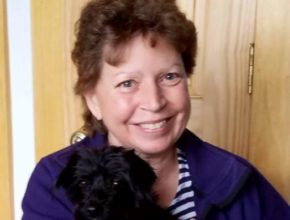
Author Archives: Lora Marie Wade

Kindness

Kindness is such a simple concept, and yet it is so difficult to fully describe. At its strongest, it has the power to penetrate the strongest armor of fear and soothe the vulnerable pain of abandonment and abuse.  Even a random act can be powerful.  It is a catalyst for a chain reaction that simply spreads goodwill with no thought for personal gain.  It is an act of love.

But kindness does not always need to be about big things.  In fact, the little things matter a lot, especially when it is a person to person contact.  Just bending over to pick up something that a person has dropped is such an act.  Smiling and looks of concern can elicit small, but significant feelings of comfort.

One can never know what another person’s life is like.  We each carry our own set of unseen burdens like a backpack.  The backpack balances their weight, making them easier to bear.  But bear them we must.  And when a new day brings a torrent of grief or worry, we can lose our footing and fall.  On a day like this, a kind word or gesture can have tremendous power.  These actions are part of a universal language.

It has always bothered me when I have heard adults say, “Children can be so mean.”  Why not focus on their capacity for kindness?  I have seen the kIndness that children can have for one another.  They have a natural ability for this behavior.  But it is not recognized enough.  Instead, we focus on inappropriate behavior that needs to be addressed.  And in doing so, we miss a wonderful opportunity to build upon the positive.

When I watch my 7 year-old granddaughter interact with my little dog, I observe her gentleness which is born of kindness. And it is as natural as it is beautiful.  The care with which she pets her and talks to her is touching.

I think that if we think of the positive outcomes, we can easily find more ways of being kind.  And it all matters.  We are dependent on each other to survive our broken world.  Think ”kindness” and it becomes a part of you.  Teach our children to think this way and talk about how “children can be so kind.”  It’s just an idea.  But it’s worth our time and energy in order to make this world a better place to live.


On Pygmies, Aborigines and Other Indigenous Peoples

Many years ago I remember watching a documentary about Pygmies.  There are many different tribes, from different places, and I cannot recall which ones were the subject of this program.  Nevertheless, there are some facts about them that really impressed me.

They were a nomadic tribe and therefore wherever they were living, was temporary.  Regardless, the place they resided in was decorated with artwork that they created. They made it their home.  And then, they left it all behind and moved on to the next place where they would create another one.  Home was where they lived, and it was everywhere.  They were connected with their environment, but detached from things. They didn’t equate things with themselves.  Things were not an extension of themselves.

Aborigines in Australia, Bushmen from different parts of Africa and Native Americans are also indigenous peoples that share this trait.  Supposedly “civilized” people have robbed them, raped their land for their own purposes, killed them and treated them as “less than” themselves.  But who are the civilized ones?

For ages, dominant cultures have seen fit to judge the lifestyles of these peoples and deem them inferior.  By whose authority was this determined?  Does the power of predominance and wealth give governments the right to decide what constitutes a valid society?  It would seem so.

There are many reasons to admire these amazing human beings.  They are one with their environments.  They have strong family ties.  They are peaceful people.  They are self-sufficient.  They have reverence and respect for Nature.  They are not tied to possessions.

On the other hand, we, the world powers, are attached to things.  Our families are breaking down.  We do not take care of our environment as we should.  We are greedy. We don’t play well with others.  We are not above using our might to get what we want, regardless of human cost or the destruction of our natural resources.  Who is it that has their priorities in the right place?

Maybe I am naive, but I think we could turn this around and make the whole world a better place, if only we examined our values.  If we could look upon these peoples and their ancient wisdom maybe we would make decisions based on principles that put life and people first.  If we would look closely at what makes humanity and what makes us humane, then maybe some of the problems we have could be transformed by emulating the ways of these indigenous peoples.  Together, we could do this.  Together, we could create a world that respects all people.

The Ones Who Came Before Us

Humans, as a species, have inhabited the Earth for millions of years.  According to Smithsonian National Museum of Natural History, with regard to the origins of humans, “Many advanced traits–including complex symbolic expression, art and elaborate cultural diversity–emerged mainly in the last 100,000 years.”  I’d like to believe that we’ve continued to evolve in our maturity, especially in our openness to diversity.  But I wonder, when it comes to that aspect of our development as human beings, whether or not this is true.

Here in the United States, we enjoy the freedom to be of any race, nationality or creed.  At least that is the foundation upon which we formed our country. About one hundred years ago, both of my parent’s parents immigrated to this country from the European continent.  They all came through Ellis Island  They came here for a better life and faced what many immigrants faced and still face today.  They were categorized by their place of birth.  And they lived in groups, forming ethnic neighborhoods with people who spoke their language and shared their heritage.  Eventually, they were assimilated and became part of the American fabric.

So why do we still have such a problem with this?  We are supposed to be a country of diversity.  But when it comes to accepting people from other cultures, we are wary at best of people who are different in terms of language, race, religion and customs.  And we still have internal conflicts that threaten what we are intended to be, a place for everyone in the “melting pot” that is America at it’s best.

Fear is the enemy.  It always is.  In the words of Franklin Delano Roosevelt, “[…] the only thing we have to fear is fear itself.”  This may seem less profound than it really is, at a time when there is so much fear in our culture.  But that is precisely why we need to think about this more, so that we can gain the wisdom to begin to drive out the fear that pervades our country and our world view.

Fear-mongering is growing in the media at an alarming rate.  With the pervasive influence of our technology, we can hear and see the same bad news over and over again, until it takes over our consciousness.  When we give the media so much power over our lives, we lose the ability to think for ourselves.  But if we are vigilant, we can take back our power and make decisions that are positive and hopeful.

The ones who came before us, came here for a better life.  Now we have to remember what it means to be rich in all of our diversity.  And then maybe we can be that place where people still want to come, that we indeed may live up to the ideals that can make this country a more welcoming place to live.


A Doggie Conversion

Two years ago, I became a dog owner.  Up until then, I had no desire to have a pet because I was gone so much.  But my husband really wanted one, and so I said okay.  We were both at home much more of the time, and had slowed down our lives, so I thought that maybe I could handle it.  I had never owned a pet, other than goldfish and a turtle growing up, so I felt a bit inadequate.

Anyway, my husband said that he wanted me to pick out our dog because he wanted me to like him or her.  He would be happy with whichever one I chose.  So I went to Pet Refuge and brought my two oldest grandchildren with me.  They wanted me to get a big dog, but we have a small house.  They liked dogs with lots of pent-up energy.  I did not.  They didn’t care about the shedding.  I did.  I knew what I wanted.  I wanted a small dog that was trained to go outside, didn’t shed much, and was not hyper.  I preferred it to have a quiet, sweet disposition.

We looked through the whole place and did not see any dog matching the description. In fact, we didn’t see any small dogs at all.  But, just  as we were ready to leave, we saw a family in one of the visiting rooms with the little dog I wanted.  I panicked and thought, “Oh no, they are going to adopt her (I just knew it was a girl)!”  I couldn’t imagine that they would not choose her.

And then they left.  I couldn’t believe it!  They didn’t want her.  I just had to see her immediately!  The woman that was still inside the room with (my) dog was a foster parent for this little sweetie.  We asked if we could see her and she said,”Of course.”  The woman with her was so nice. We sat down in the little room and she placed her on my lap.  I began to pet her and in a few minutes, she was asleep. I wanted her!

Her name, (yes, she was a girl) was “Tiny” and she was adorable.  I asked what I needed to do to adopt her.  There were two interviews and references required.  There were many questions to be asked and answered.  We had the first interview on the spot.  I was so excited.  I couldn’t wait to take her home.  We went through every requirement and jumped through every hoop.

When we went to pick her up, she wasn’t ready to leave her foster mom.  I felt so unsure of myself all of a sudden.  But the foster mom assured us that she would bond with us.  And she did.  I was totally amazed by the change in me.  I loved her.  I mean really loved her.  I could feel it down to my toes.  It was a transforming experience.  It was like she was my child.  And it is still this way.  No one has ever been as happy to see me when I come home as she is.  She is pure joy.  I finally understand why dog owners are a breed of their own.  And now I am one of them too.


Gratitude and Happiness

Everyday I thank God for the gift of gratitude, which is at the heart of happiness.  This is one of the prayers that begin my day, everyday.  A long time ago, I remember reading somewhere that you cannot be grateful and unhappy at the same time.  This resonated with me, and I thought about it and meditated on it, deciding that this was absolutely true.  The very act of being thankful brings appreciation.  And appreciation causes you to think about all the good in one’s life.  How can that lead to unhappy thoughts?  It can’t.

The reason given for this phenomenon was that it was impossible to hold two opposite ideas inside your mind equally.  They conflict, and either one or the other will be stronger.  The stronger one wins and becomes the dominant thought.  Therefore, we can convince ourselves to feel happy by creating the intention of thankfulness.  Actually, I think the two can occur almost simultaneously.

One day, I decided to pray a simple prayer in my mind beginning when I was still in bed.  I started out by thanking God for my bed, my house, the paid bills, my job, my insurance, etc.  I found that I could go on and on and on and still not have mentioned all the blessings I have.  And I hadn’t even begun to mention my wonderful family and friends.  And then, there was my  sweet little dog and the opportunity to share my talents and be of service.  I found out that it never ends, once you get started and really think about how much there really is to be grateful for in one’s life.

And yes, there comes a time in everyone’s life, when tragedy happens and the deep sadness takes over.  This is natural and all part of this journey we call life.  It happened to me when my son was killed in an accident.  One day, he was hugging me and thanking me and saying goodbye after visiting me, and the next thing I knew he was dead.  The shock and grief hit me with a force of devastation that left me numb.  I couldn’t believe that it was true, even after I had seen him lying on a table in the morgue.  It was just too much to take in.

What kept me from being in total despair was the fact that I was so grateful for what I had with him.  The relationship, the memories, my last moment with him, all were blessings.  No one could ever take those things away from me.  They would always be true.  Gratitude saved me.  It saves me still.

Most of all, gratitude costs nothing, requires no terms, is always available and the benefits are endless.  No matter what happens, even if it is much worse than death, you can choose to be thankful.  And by doing this, you choose to be happy.