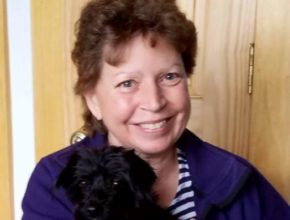
Author Archives: Lora Marie Wade

Entitlement Issues

There is something I witness, every day it seems, that really gets under my skin.  It is the fact that many of us, including myself, have entitlement issues.  Let me explain.

Merriam Webster has three definitions including: 1.  “the state or condition of being entitled: RIGHT” and 2.  “the belief that one is deserving or entitled to certain privileges.”  Finally, there is 3.  “a government program providing benefits to members of a specified group, including funds supported or distributed by such a program.”  Does everyone have rights and privileges?  I wonder.

If we are talking about basic rights, such as having respect for others and valuing each person’s dignity, then we should be able to agree that one could expect this treatment just by being part of the human race.  Beyond this, what are we entitled to have?

On the news, we hear Social Security benefits as being “entitlements.”  This is a problem because we have opposing ideas of what an entitlement means with regard to this program.  People who have contributed to this fund for all the years of their work life do not consider this an “entitlement” because the way in which this term is employed by politicians gives the sense of them NOT being entitled to it.  The exact meaning of the term is shrouded in innuendo.  The funds dispersed to a senior citizens by the government was first entrusted to the government by the senior citizens. Therefore it is the right of said citizens to have the money that was invested over a lifetime, returned to them when they are no longer employed.

The real issue is in the term “entitlement” and which definition is appropriate for each example.  The wealthy want “entitlements” (i.e. special treatment) in order to pay less to the government in taxes, stating that they are then able to provide more jobs etc., whether or not they actually do so.  And a sense of entitlement often refers to young people who don’t want to do anything in exchange for things with which they are provided. There is a jagged line that divides these definitions and attitudes.

The main problem is that the definitions often seem to contradict each other.  I know that each of us has felt entitled to one thing or another in our lives.  The most important thing is to clarify the meaning of this term when it is used.  Otherwise, every time the word is spoken, there is an opportunity for conflict.  And the worst thing about that is that our communication breaks down.

So, the next time you and I talk about “entitlements,” let’s be clear about what we are talking about.  If we do that, then we will be able to have a reasonable conversation with each other.  And maybe we will learn from each other in the process.

Friendliness

I can honestly say that I had no idea, when I was growing up, that being friendly would bring me so many benefits.  That’s not why I was friendly.  I was friendly because the people around me acted that way.  I learned it. At some point, I had to be told that friendliness was not always a good idea.  As I became a teenager there were situations in which to avoid this behavior, as when it could be seen to be an invitation to unwanted attention.  Well, you know what I mean.

But, then there comes a time in your life where there is a lesser chance of that happening because you are older and wise to the situations if they should present themselves.  Women my age, (over sixty,) generally do not have a problem with unwanted attention.

So, let’s return to the benefits of friendliness.  Whenever I smile and say “Good morning,” or “Hello” to people, they usually reply in kind.  I have begun friendships as easily as a first encounter with someone.  Conversations can sprout from just a few words.  To me, it is amazing that this is possible.  It has happened to me on many occasions and has blessed me every time.

I am the beneficiary of having friends all over the world that stay in touch with me and some of whom I have visited in far away places.  It makes me so happy to have friends of all ages, races, nationalities and faiths.  People who are the most different from me, enrich my life deeply because they teach me so much about the incredible variety in humankind.  Old friends are as valuable as gold because they already know so much about you and you know so much about them. With these friends, sometimes words are not even necessary to communicate.  Meeting new friends is like finding a buried treasure chest.  You never know exactly what happy surprises are in store.

Finally, friendliness can bring joy, encourage, give hope or even relieve stress. Sometimes, just a smile will be enough to make a bad day better.  It costs nothing to do this, and the rewards are great.  Smile a lot and laugh easily to make yourself a positive force.  You may find that you are glad you did.  I know I am.

Manners

Manners.  Remember them?  Please.  Thank-you.  May I?  Excuse me.  I’m sorry.  It was my fault.  These are some of the appropriate remarks and responses in polite society.  And they seem to be used less and less these days.

In a high school, where I work, I am constantly being asked by students, “Do you have a pencil?”  “Yes,” I reply.  And then the student will just look at me expectantly.  Finally, I say, “Oh, do you want to borrow one?”  Then, I get a puzzled look and/or a “What?” in reply.  Then, if they make an attempt to ask for it politely, I will give it to them.  Finally, after class, I often have to retrieve it. Otherwise, “borrowing” turns into “walking away with it.”

In the crowded halls, I will sometimes be hit by a kid that decides to run, or hit someone else or change directions in front of me.  On a rare occasion I get a reply of, “My bad.”  Where in the world did that come from?  Or, once in a great, great while, someone will say, “I’m sorry.”  Mostly, I get a dirty look, sometimes accompanied by, “You were in my way!”  (Sigh.)

People stand in groups, in doorways, and when I say “Excuse me.”  they grudgingly move, slightly.  I can feel an undercurrent of anger while walking in the building.  Sometimes it is so thick it seems like I could cut it with a knife.  I can feel a fight brewing from 20 feet away.

Discontent and anger fill the halls.  It makes me feel sorry for them.  I wish I could empathise with them, but I don’t know how.  I just try to roll with the punches and throw encouragement at them whenever possible.

It has made me realize that manners is not at the top of the list.  Maybe it is not even on the list.  Before a person can give consideration, one must have been given consideration.  Otherwise, how can a person learn to do something having never experienced it enough to understand?

Somewhere along the way, manners fell by the wayside.  People didn’t notice until it was prevalent enough to enter their lives.  It was too late to thwart the behavior.  Now, it needs to be relearned and reinforced for a considerable length of time, to undo the damage.

Our society has many tears in it.  One by one, as we repair them, the fabric will be made strong again.  We just need to see them, recognize them and work on ways to nurture the true nature of our humanity.  And then, maybe manners will return to become the norm, rather than an exception in our society.

We Are All Connected

Did you know that, according to National Geographic News, “ skulls and DNA of human remains from around the world say their results point to modern humans (Homo sapiens) having a single origin in Africa?”  This scientific evidence confirms a theory that we all are children of Africa.  This is fact, not just an opinion, that I believe holds the key to world harmony, if only we would choose to view it that way.

In spite of this documented information, our world view does not depend on facts but on our opinions, complete with our own set of prejudices and biases.  These perspectives are learned, not innate or natural at our birth.  Therefore, they can be re-learned.  I think that we are entering a critical time in history, in which, we need to reexamine the way we think of other human beings that are different from ourselves.  Because, in spite of our differences, we are all connected.

Religion, ethnicity, race and money have separated us in the name of God, country, color and wealth.  In spite of the fact that all of these things are good, in and of themselves, the ways in which we have used them have caused wars, revolutions, poverty, slavery, hunger, thirst, illness and death.  There may be other, expressed reasons, for these horrors,  but greed plays a big part in the miseries of this world.

I have a dream that we could live in harmony because there is enough food to feed the hungry.  There are enough resources to make sure people have safe drinking water, healthcare and housing.  We have enough to care for the poor and aged and support the rights of all people to have their own beliefs and to worship as they wish, or not.  We have the ability to allow people to be who they are and not be judged for it. It is in our power to make sure that people who work be adequately paid for their labor.

Sure there would be restrictions.  A world without rules for safety, laws to protect us and enforcement of those laws would cause chaos.  But, it could be a kinder, more loving place if everyone had the welfare of others in mind as well as our own.  If only we would accept the fact that we all are connected, we could make this world a better place for everyone.

You Don’t Have to Like Someone to Love Them

Now you may be saying to yourself, “How can I love a person who is mean to me or who has a nasty attitude and doesn’t like me or even hates me?”  Maybe this is because we only think of love in terms of “a mother’s love” or “romantic love” or “platonic love.”  I am not speaking of the ways in which we describe human love.  I am referring to the kind of love that God has for creation.  It is the kind of love that we are called to do, if we want to live in a kinder, more loving world.

I start with the people I don’t like very much.  And then I practice loving them by saying nice things about them in my mind, even if I don’t believe them to be true.  This exercise, and others I have read about, can change our negative feelings into a softer version of dislike so that eventually loving them is a much easier concept to believe.  I am not saying that I am good at this.  I am just trying to accept the idea of it being possible.  And on some occasions it has even worked.

There is no way that I can do something successfully until I can fully embrace the feeling of it.  I know what love feels like, so I can teach myself to feel differently when I am in a bad situation and don’t feel loving at that moment.  Whether or not you believe in God, or a higher power, or just “goodness,”  there is good and evil in this world.  The way we approach these opposites is essential in order to make positive decisions.

Loving the people we like is so easy.  It’s a joy just to be with these people.  But loving people that we think of as “bad” is about as difficult as it gets.  We tend to think of things in black and white, but in reality, there are only shades of grey.

I once read a story about a man who had a mother-in-law that treated him with disdain, talking to him with disgust and just generally acting negative around him.  She was in a wheelchair and he had to help her with tasks that she couldn’t do, because his wife was unable to do those things for her.  He didn’t like her very much because of this, but to make the experience more bearable, he decided to be nice to her and ignore the things she said and did.  He always greeted her warmly and gave her a quick hug upon leaving. She would always stiffen at his touch, but he was kind to her no matter what she said or did.

One day, he was in a hurry and had to make a quick visit, forgetting to hug her.  As he was leaving, she called out to him, “Where’s my hug?”  He turned to look at her, smiled to himself, and ran back to give her a hug.  She was still not totally warm to him, but the stiffness was gone.  Loving actions had changed her. Then he realized that that he had changed too.  He had grown fond of her, in spite of himself.  Love is like that.  It changes things.

This exercise of loving action, regardless of a matching, internal emotion, is an example of ”faking it til you make it.”  Acting “as if” you are good at something can have measureable results.  It can work. And even if it doesn’t work at first, we need to keep trying.  It may take a long time to have success.  But without trying, things will remain the same.  I think that this exercise is worth the effort to make my life more meaningful and happier.  How about you?